Tuesday, April 13, 2010

Mulhall's Spring Show 2010


The NBS held a bonsai display and demo in conjunction with the Mulhall’s Spring Show on Saturday.

Max Miller, Les Bingle, Fred Hutchinson and myself all brought trees for the display. Max brought a refined deciduous tree (I don’t recall the species) that he trained from nursery stock, and a large, upright fig. Fred brought a Ficus clump, while Les arrived with a collected Malus, ‘token’ dwarf Spruce and a Betula. The highlight for me was the story behind Les’ collected Birch.

Recently married and on his honeymoon, Les saw a group of Birch’s growing in the corner of a parking lot on a very shallow bed of soil. He immediately grasped the opportunity and dug up every tree in the lot. I regret not getting further details on his wife’s assessment of the situation, but if she wasn’t aware of Les’ passion for bonsai prior to getting married, she certainly was now. Fortunately, Les carries around a bottle of Super-Thrive at all times, so he drenched the roots and hoped for survival. Years later, Les is happily married with one remaining Birch. So, needless to say, that Birch carries some meaning.  

Kim Stevens put on a repotting demo, as he reduced the root system of a dwarf lilac.  And after much discussion, I believe Max and Kim convinced Fred to size down that Benjamina fig grouping.

Thanks to Paul Blajan for capturing these photos and Dana and Mulhall’s for organizing.

Wednesday, April 7, 2010

Yamadori Bald Cypress Part I

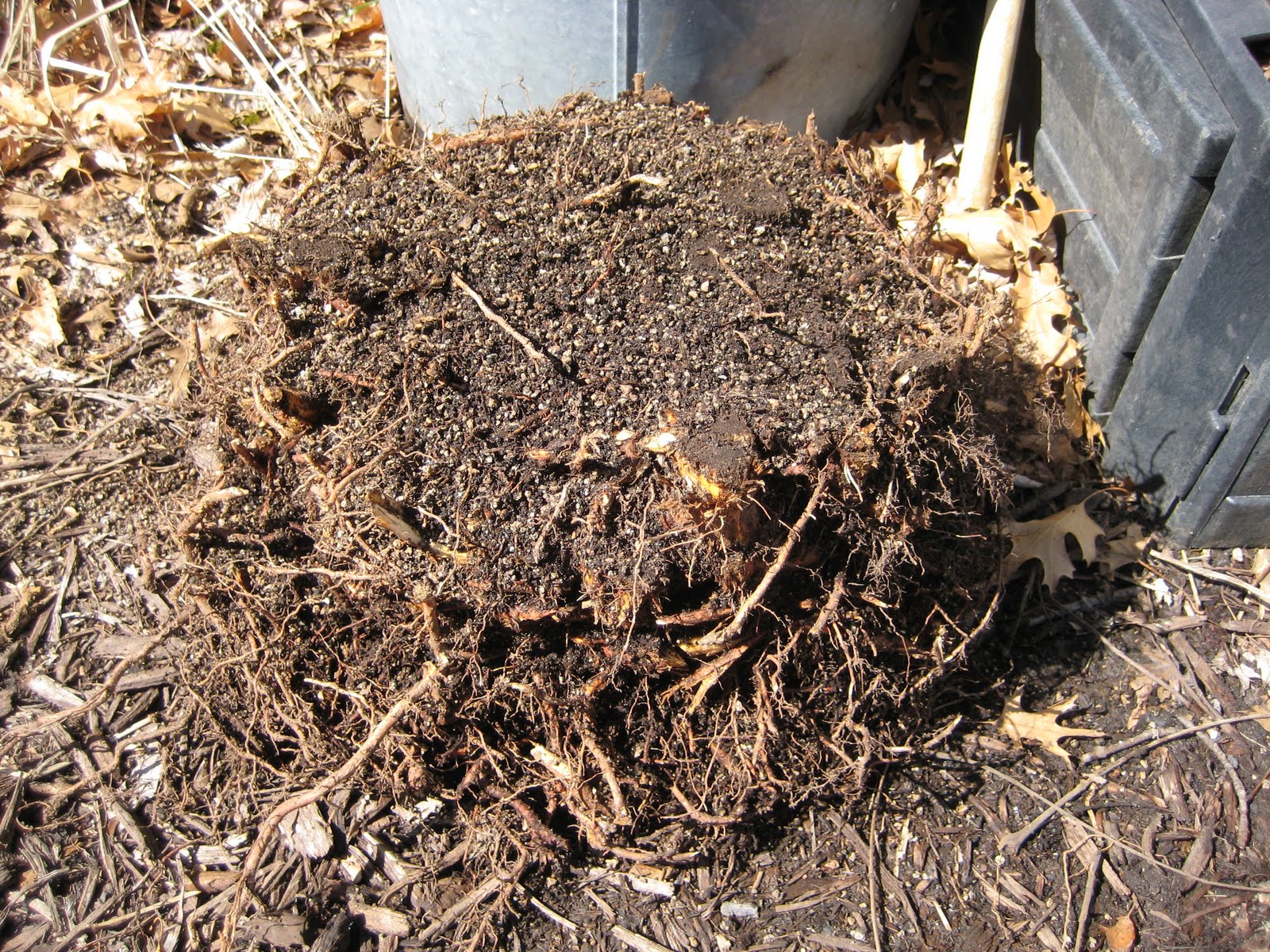
I have spoken before of bonsai’s unique submission to nature. Generally, this idea is most often conceived or applied when styling or designing a tree, but this time, it had nothing to do with art or philosophy (which I tend to engage in way too much anyway), and more with backaches, sore muscles and a hand-saw. This tree was shipped to me with its root ball wrapped in plastic and covered with a trash bag, so after a few hours of box cutting and peanut pushing, it was time to repot. With a bit of root raking and cutting, I figured it would fit nicely in its new training pot. The temps were bordering on freezing here in Lincoln, so I decided to take this job out to the greenhouse. Never before have I required a wheelbarrow to tote a bonsai.


After some initial raking, clawing and maneuvering, I stared down at my bent-up steel rake and realized plain bonsai tools weren’t cutting it. I broke out a few of the garden tools and began to dig in. Once I managed to actually see the middle of the root ball, it was covered in hardened roots, which had grown to over a few inches in circumference-it appeared the root system had not been tended to after the tree’s collection. I borrowed a hand-saw from my neighbor and began to separate the bottom two-thirds of the root system.


Tuesday, March 30, 2010

Nebraska Bonsai Society Application

I've added a link (to the right) for the NBS member application.  You should be able to complete it on-line since the form is fillable or you can download it as a Word doc and complete it.  The completed application can be sent via Email to the address noted on the application.  Don't hesitate to leave a comment if you run into any issues.

Monday, March 22, 2010

Oto Hime Japanese Maple


This was my first tree breaking dormancy this year and has been leafed out for nearly a month now. I’d imagine it’s still adjusting to the shorter Midwest growing season, as it spent its previous life as an apex in Savannah. Last year, I let it grow wild to develop the root system, then after leaf drop, I thinned it out a bit and did some wiring to broaden the spread of the integrated crown. I decided to use a vertical branch from the largest tree to simulate another tree in the grouping. Naturally, this branch’s growth is behind that of the others since this tree is focusing its effort on the apex, but I expect it to catch up. I’m doing considerable pinching to promote some 3-D growth since the front and back are pretty barren. I managed to flatten the root ball enough to plant this piece in a shallow Sara Rayner tray and to lessen the stress of this transplant, I’ve covered the soil surface in a new moss I picked up referred to as Yamagoke, I believe. This stuff rocks – it maintains a nice, even moisture, sits firmly on the surface and is nearly stickless.

Sunday, March 14, 2010

Nebraska Bonsai Society

Thank you all for attending the seminar at Mulhall's.  For those of you who participated in the workshop, we do plan to have follow-up workshops over the next few years as your tree develops and is in need of further training and root care. 

We will be holding the first meeting of the Nebraska Bonsai Society (if that name is decided upon) at Mulhall's on March 28th at 2:00 p.m.  Be there!

Monday, February 8, 2010

Omaha Seminar & Workshop

I'll be at Mulhall's on Sat. Feb. 27th to lead a seminar and workshop.  The seminar will consist of a Powerpoint presentation that I've been compiling and should be of interest to any skill level.  The workshop is geared more towards beginners and includes a selection of sub-tropical/tropical stock.  You can select the pamphlet below to get a larger, more readable version.

Wednesday, December 16, 2009

Yamadori Korean Hornbeam II

I was fortunate enough to find this stock in 2006 at a nursery in Seattle. The Korean Hornbeam is one of the finest deciduous species for bonsai and their collection in the Korean mountain ranges is now banned. I don’t have the details on exactly why, but can only assume they were becoming too sparse. The tag on this one noted Pusan, as the area of collection, which is on the southeastern coast of Korea, overlooking the Sea of Japan (East Sea).

The secondary branching on this species naturally zig-zags to create an affect that is often emulated by wire training-just one of its many great traits (see this post). The tree was badly overpotted when purchased (not to mention that unsightly blue-glaze), so I special ordered this tall, Tokoname container for it. The height of the container is similar to the trunk girth and the width is just right. The collected ones can be so gnarly/masculine that an unglazed container suits them just fine.

Just like it’s little brother, Yamadori Korean Hornbeam I, as noted in previous posts, the apex region needs further refinement. With this one, it has really been more about creating the best taper I can without growing a new apex branch from the large wound. I’ve got a spot picked out in the backyard and a pedestal built for display next year.

I’m currently mapping out the new backyard for bonsai benches and stands. I plan to document this on my blog as this project progresses. This book by George Buehler has been a great resource thus far.

2006 (after first trim/wiring)


and today...


Monday, November 23, 2009

Yamadori Korean Hornbeam I - Part III


Just finished working on this over the weekend.  The apex branch spent all of last year wrapped in rafia and large wire.  I managed to get some considerable movement from this and the two small branches in that region are keepers.


Karin

This is my first and only Chinese Quince I’ve ever grown. This tree was originally trained using the clip and grow method from a cutting by Luigi Trapani. I believe the cutting was taken from Bill Pfeiffer’s parent tree, growing in his landscape. It has a very small leaf, making it ideal for bonsai. No large trunk on this slant, but nice subtle movement in the trunkline. This was the tree’s first growing season in the Midwest and it grew like a weed. I was trimming constantly just to keep the branch diameter in scale. When the weather cooled in early fall, there was another flush of growth, some of which is yet to die off even after freezing temperatures. The bark also peeled exorbitantly this summer shedding its skin from the root base all the way up to the apex. I believe some of this can be attributed to transplanting in spring and a consistent dose of fertilizer during the growing season. Wiring this tree was a cinch since the branches are extremely flexible. I decided to incorporate some jin-I thought the deadwood provided a nice variation in color, especially when paired with the bark. It will be a fun one to pick a container for eventually, but the branches held by the guy wire will need to sit for at least one growing season.

Before and after photos…


My bonsai assistant, Cali


Tuesday, November 10, 2009

Arakawa


This Rough Bark Japanese maple is easy on the eyes and is a fine example of a twin trunk. I can’t take credit for the design - I’ve only refined it the last three years. It was one of Suthin Sukosolvisit’s creations. I particularly enjoy this tree during dormancy, when its truly exposed for what it is. Since the Arakawa has a regular-sized Acer palmatum leaf, it’s not easily reduced and Japanese maple have not typically responded well to defoliation for me, regardless of the environmental conditions. So, I won’t be ready to display this tree during the growing season until I’m able to moderate the leaf size.